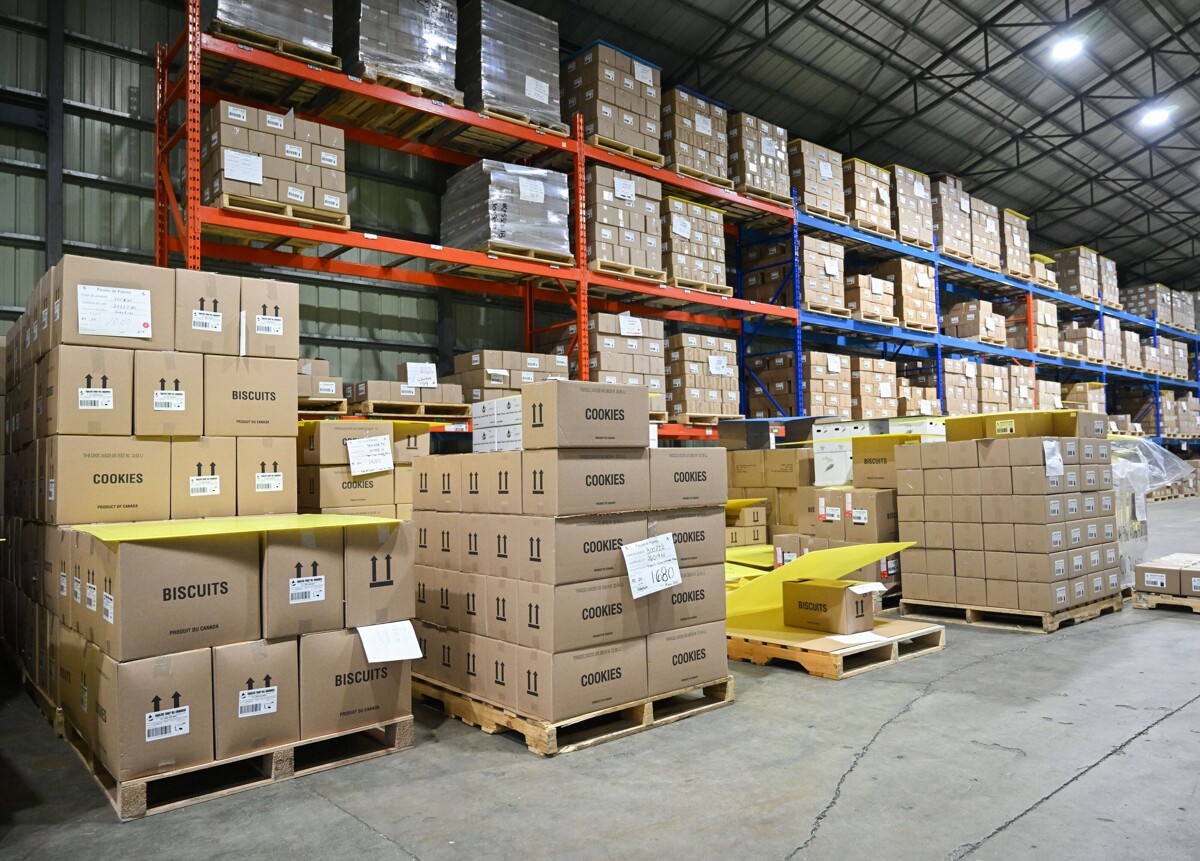
The industrial real estate market in Mexico City (CDMX) and its metropolitan area has been highly dynamic for the last 6 years, largely influenced by the impact of e-commerce on the demand for logistics spaces. The influence of this segment has left several trends that confirm the continuity of a business that doubled rental prices in this period, raising them to over $10.82 per m². This scenario has motivated significant changes in logistics activity. This is a one-way street when considering that by 2025 alone, online sales grew by 19.2% to reach 941 billion pesos from 67 million users, which spurred 90% of the demand for logistics spaces in the metropolis. Consequently, the activity focused on the subsegment that supplies the demand for last-mile spaces within CDMX has led to the conversion of Class B buildings with commercial and service uses of a suitable size to be transformed into warehouses with specific requirements. Key aspects of this supply are location, loading docks, maneuvering yards, electricity, and a series of other elements that also require price competitiveness, an aspect that has limited greater expansion to this day. To understand the price dynamics, it's enough to note that in 2020, the average rental levels were $5.38 per m², i.e., half of the current maximum value. Meeting this demand requires addressing the needs of last-mile users: efficiency, technological advancement, and proximity to the local consumer to reduce delivery times for products purchased by a buyer with growing demands for effectiveness. Those who track this segment consider that significant additional challenges, such as management and infrastructure, exist, and prices are forcing tenants to reduce their center footprint by up to 20% through base inventories that are supplied by larger-scale logistics centers located on the periphery. Likewise, the integration of vertical warehouses is on the rise, a phenomenon that compensates for a market that has long made the emergence of complementary corridors on the east side of the city feasible. Even so, demand continues, and according to the latest report from Cushman & Wakefield México, construction of 865,000 m² was underway by the end of the 1st quarter of this year, driven by e-commerce absorption that is expected to reach 1 million m² by 2025. Therefore, on the other pole of expansion, large-format distribution centers (big box) are gaining relevance, consolidating the construction of spaces in established corridors like CTT (Cuautitlán, Tultitlán, and Tepotzotlán), where most of these new developments are concentrated, without overlooking the growing weight of the area extending from Zumpango towards the Felipe Ángeles International Airport (AIFA). These are spaces with areas larger than 20,000 m², greater heights, ample maneuvering areas, and strategic connectivity with highways and key logistics nodes. They also require automation, technical sophistication, electrical capacity, and preparation for technology-intensive operations. In all, both niches are priorities in the region's logistics evolution because they complement and balance the demand for distribution centers that feed last-mile warehouses from zones adjacent to major consumption hubs. This phenomenon is not exclusive to CDMX; it can be easily compared to Monterrey, where logistics activity is also combined with export manufacturing driven by nearshoring, currently anchored in the renegotiation of the USMCA. Undoubtedly, this is a strategic inertia for the present and future of the business. We will keep an eye on it.